
Description
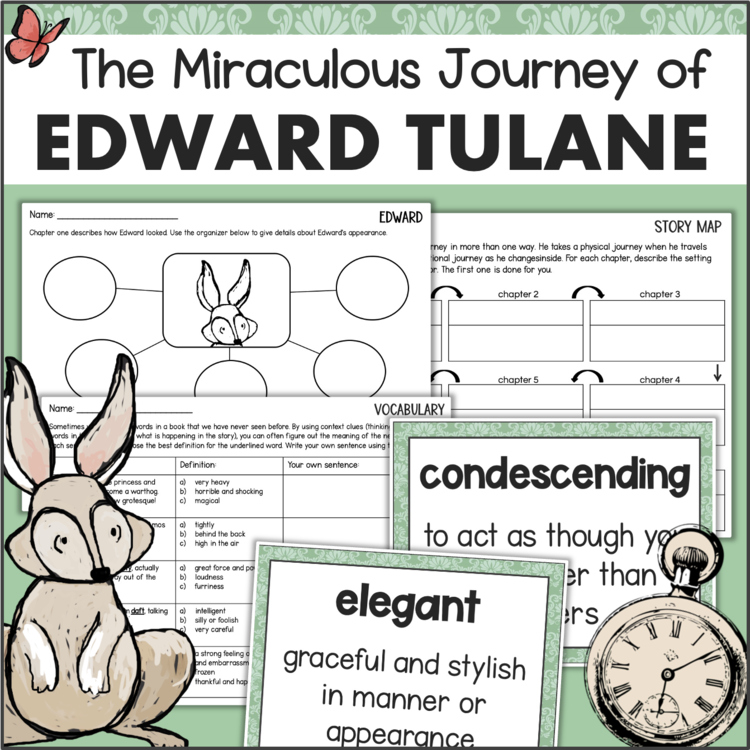
This novel study resource for The Miraculous Journey of Edward Tulane by Kate DiCamillo covers character traits, vocabulary, story mapping, and reading response activities to use alongside the book.
The book is packed with rich, sophisticated vocabulary and a main character who changes dramatically over the course of the story — this resource gives your students structured ways to dig into both. It works well for whole-class instruction, small groups, or independent reading response work.
WHAT YOU WILL GET:
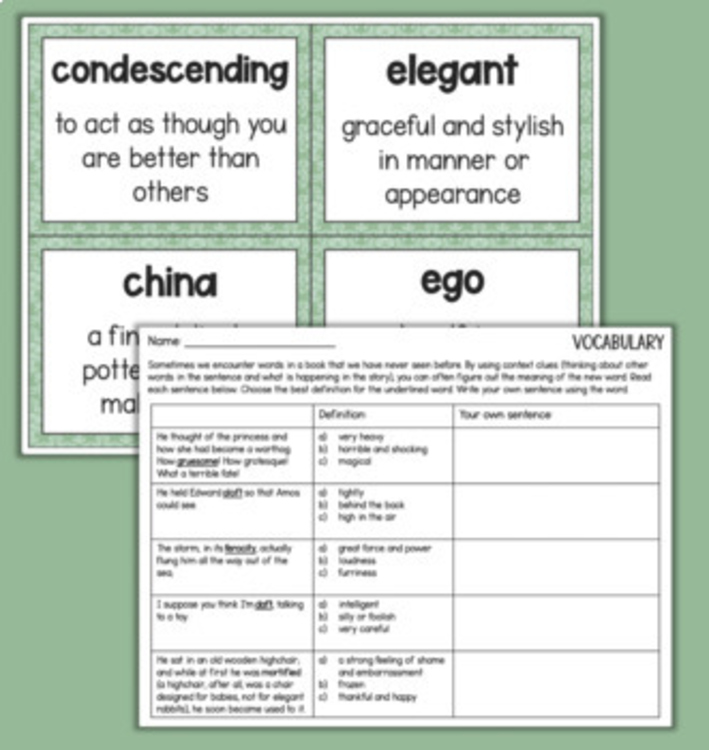
- 32 vocabulary cards with words and definitions
- Vocabulary list with chapter numbers
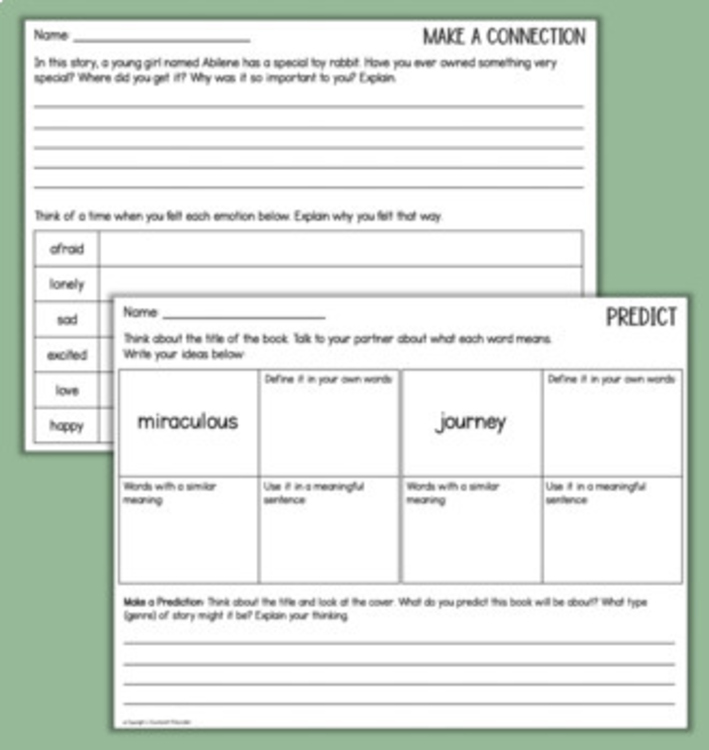
- Prediction worksheet
- Making connections worksheet
- Story map activity
- Vocabulary/context clues worksheet
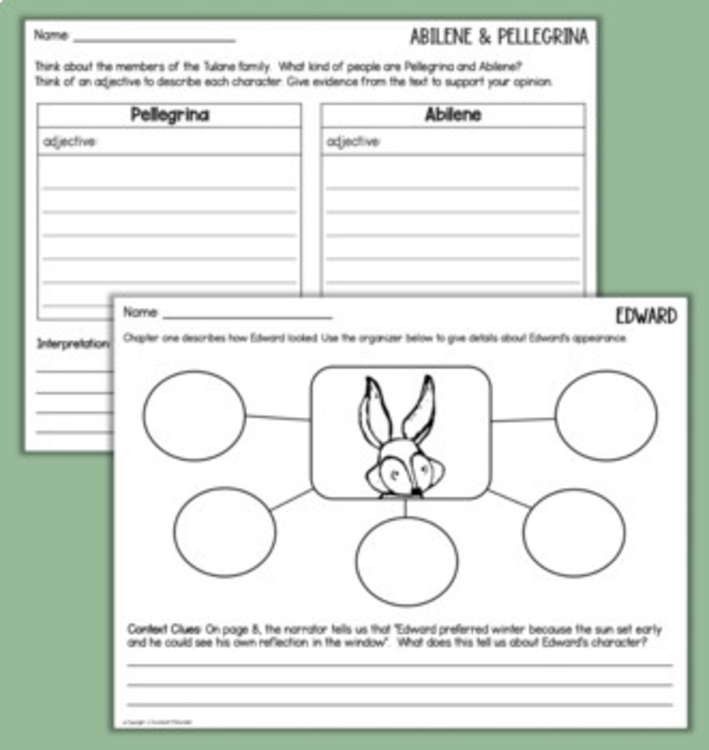
- Character traits worksheets for Edward, Abilene, and Pellegrina
- Compare and contrast Venn diagram
Vocabulary Cards:
There are 32 cards, each with a word from the story and its definition. Because the vocabulary in this book is genuinely challenging, these cards are designed to support explicit vocabulary instruction as you move through the chapters. The vocabulary list also tells you which chapter each word appears in, so you can introduce words before students encounter them in the text.
Prediction Worksheet:
Before reading, students define the words “miraculous” and “journey,” use each in their own sentence, and then work with a partner to predict what the book might be about based on the title. It’s a good way to front-load two key concepts before you even open the book.
Making Connections Worksheet:
Students make a personal connection to the character of Abilene and then write about times they’ve felt specific emotions that come up in the story — afraid, lonely, sad, excited, love, and happy. It ties the emotional landscape of the book to students’ own experiences.
Story Map Activity:
Students track Edward’s attitude and character trait changes chapter by chapter as the setting shifts throughout the story. This keeps them actively noticing how Edward develops over time rather than just following the plot.
Vocabulary/Context Clues Worksheet:
Five short excerpts from the book each contain a target vocabulary word. Students use context clues to figure out the word’s meaning, choose the correct definition, and then write their own sentence using the word.
Character Traits Worksheets:
Students identify character traits for Edward, Abilene, and Pellegrina and interpret the actions of Edward and Pellegrina. A third worksheet has students keep track of each new character Edward meets throughout the story and classify those characters by how they feel about Edward — whether they love him, dislike him, or are indifferent — with evidence from the text to back it up.
Compare and Contrast:
A Venn diagram worksheet where students compare Edward’s character at the beginning of the story to his character at the end. It’s a great way to wrap up the book and have students reflect on how much he’s changed.
These activities work well spread across a whole-class novel study, used in small reading groups, or assigned as independent reading response work. They cover vocabulary, character analysis, making connections, predicting, and comparing and contrasting — so there’s a lot of skills covered without you having to piece together materials from multiple places.
Check out the preview for a closer look before you purchase.


 Reload document
  Open in new tab
Reviews
There are no reviews yet.